Behind the Counter
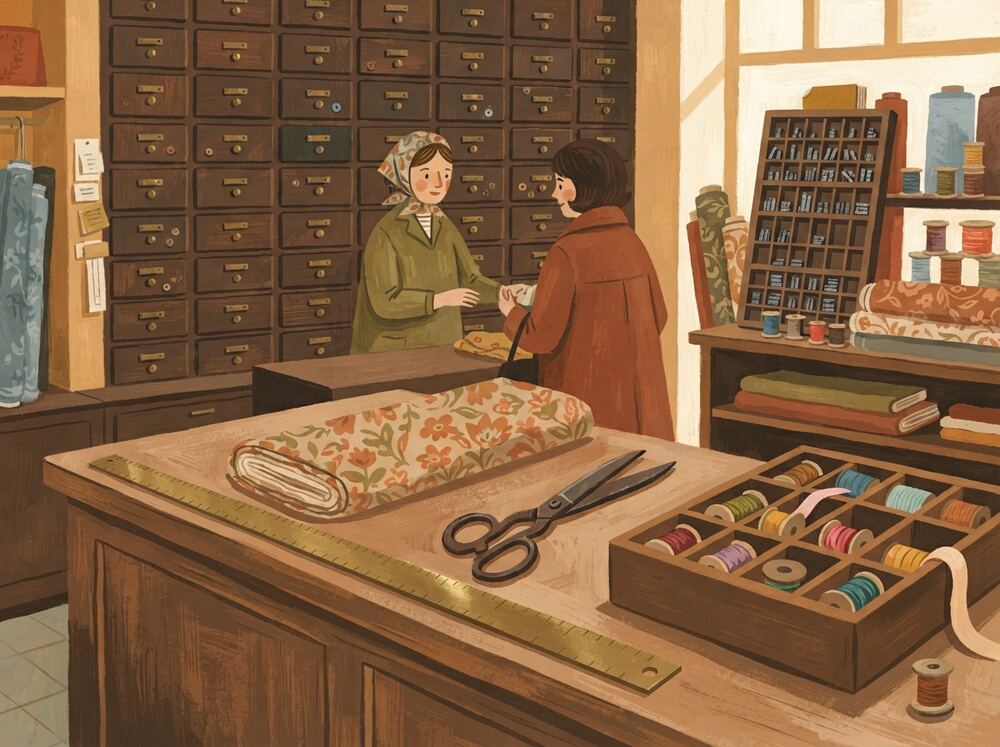
Ruth: I started at Hanley's the Monday after I left school, and I stayed nine years, until Janet came along. I swept the floor and carried the parcels for the first year, then they let me stand behind the counter and measure the cloth.
You measured it off the roll against a brass rule fixed to the edge of the counter, and you cut it with a big pair of shears, and I could tell you a yard and a half from across the room. I knew all the customers. I knew which woman wanted a velvet ribbon for her granddaughter's hair, and which man was buying a hat for his wife and was too embarrassed to say so. You can learn a great deal about people from what they buy for others.
Mr Hanley was very strict about the buttons. They were kept in little wooden drawers, hundreds of them, each one labelled, and if one of them was in the wrong drawer he knew. I'd say he could tell by the sound.
When the children were at school, I went to work in the dinner hall, and I stayed there for twenty-two years. I cooked for two hundred children a day. They were not all well behaved, but I never met one that didn't like a custard. I still get stopped in the supermarket by men in their forties who say, 'Hello, Mrs Ashby, do you remember me?' And I do, nearly always. They were the ones who asked for seconds.
The Press Room
Stan: I stayed at the same firm for thirty years. People say that now as if it's a strange thing, but in my day you found a good place and you stayed. By the time I was thirty-five I was the foreman of the press room, and I had eleven men under me, and not one of them was ever late.
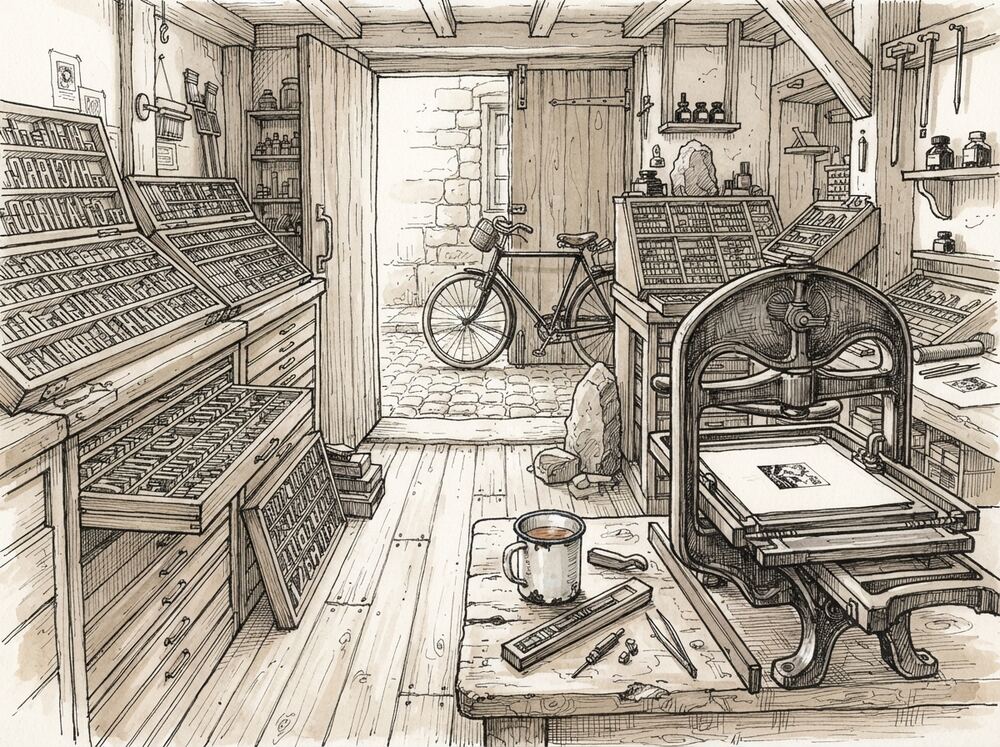
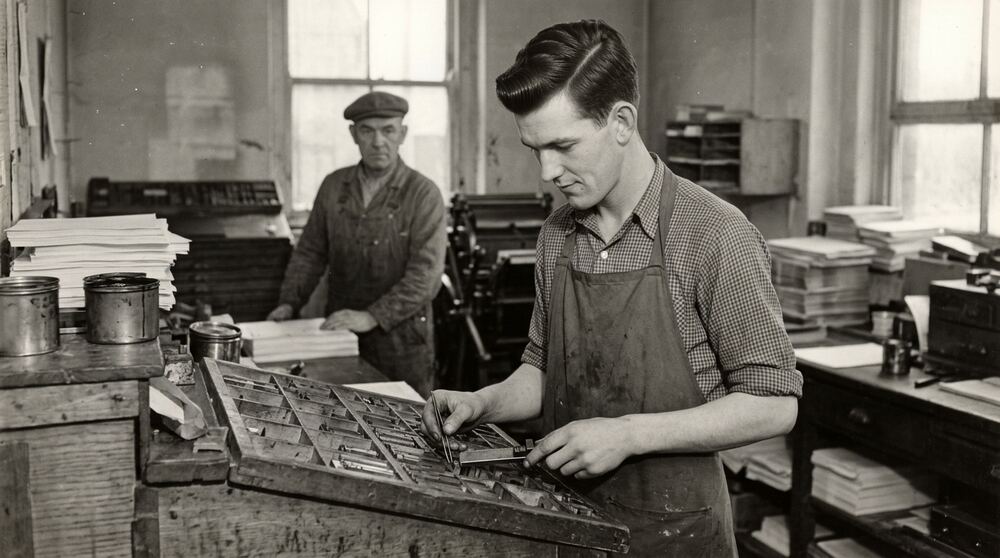
My job was to make sure that whatever came in through the door, whether it was a hymn sheet, a wedding invitation or a catalogue of garden tools, went out the other way looking right. I'd walk down the line of presses every morning with a cup of tea in my hand, and the noise of them was like being inside a very large clock.
The work changed a good deal in my time. We started with metal type, then we went over to photographs and plates, and at the end the computers arrived, and a boy of nineteen showed me how to do in ten minutes what had taken me a week. I wasn't against it. I just missed the weight of the type in my hand.
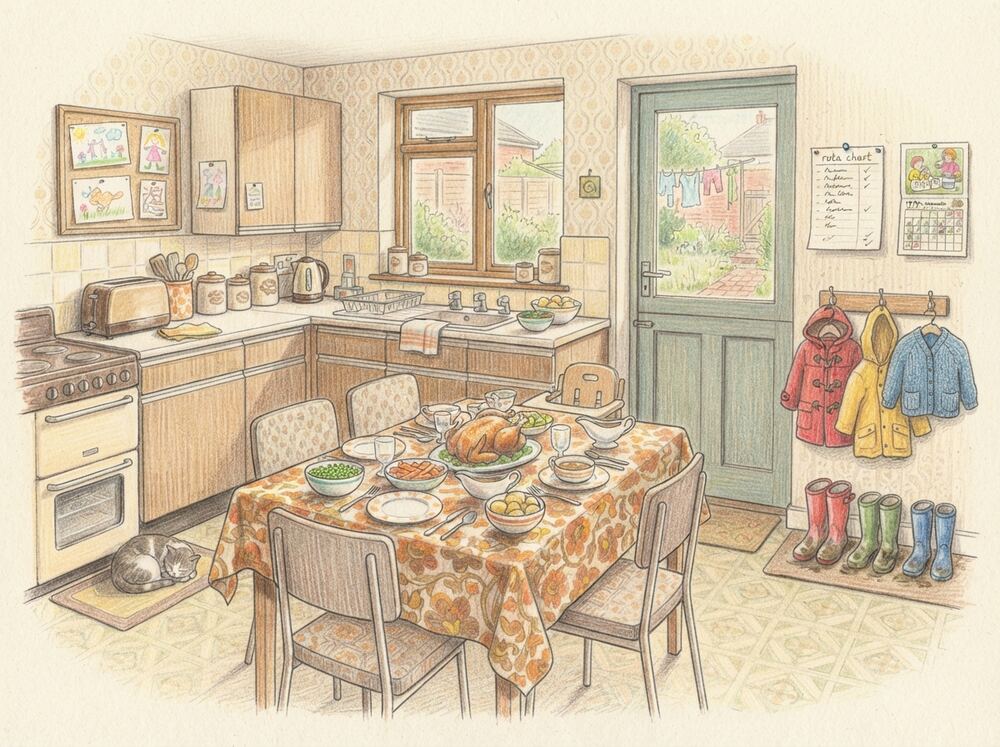
Friday was pay day, in a little brown envelope with a window in it. I'd bring it home and put it on the table, and Ruth would tip it out and make it last. I never once saw her look worried about it. She would say, 'We'll manage,' and we always did.
I never missed a day through illness in thirty years. Ruth says it was because I was too stubborn to catch anything. She may be right.
The Works Outing
Every June the firm took us all on an outing, wives and children and all. It was the best day of the year, and it was paid for by the owner, old Mr Ellery, out of what he called the goodwill fund, though I never knew it to be used for anything else.
We went by coach, a proper one, with a driver in a peaked cap, and it left from outside the works at eight o'clock sharp. Everybody was in their best. The men had ties on and the women had hats, and the children had been scrubbed so hard they shone. A man called Reg from the stitching room played the mouth organ and led the singing, and by the time we were out of Bristol the whole coach was doing 'Daisy, Daisy', with the actions.
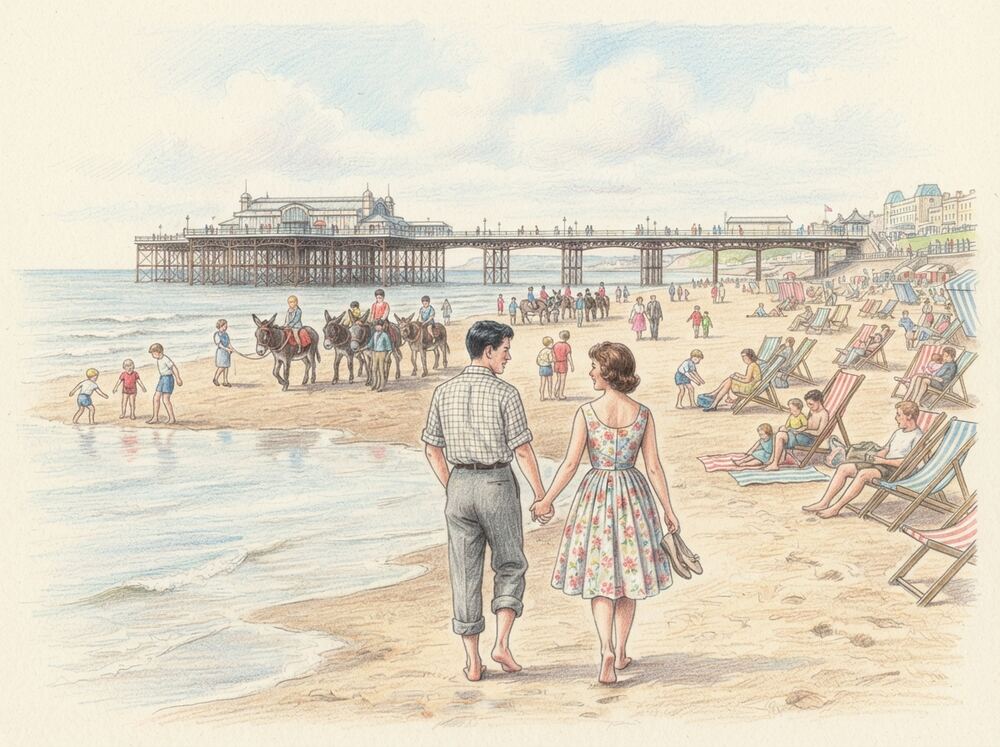
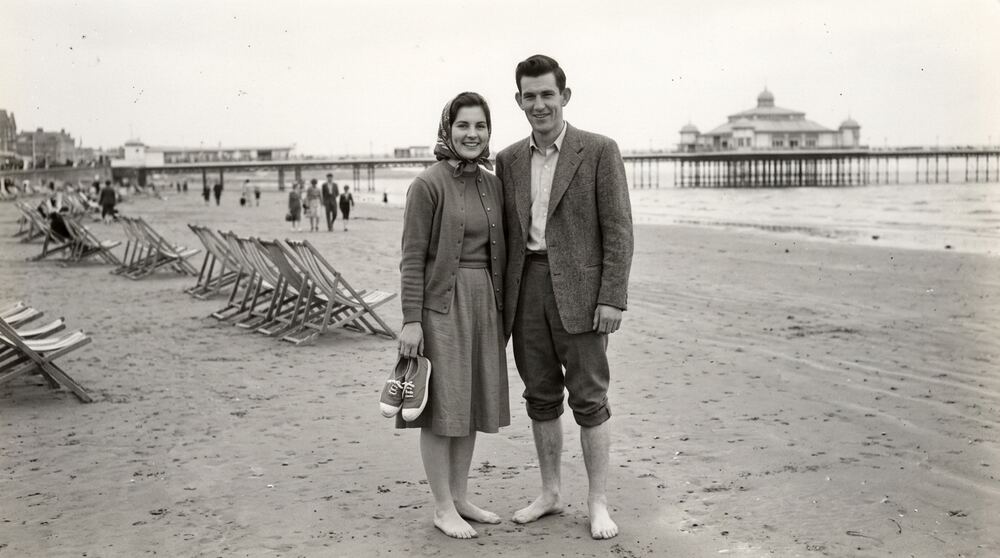
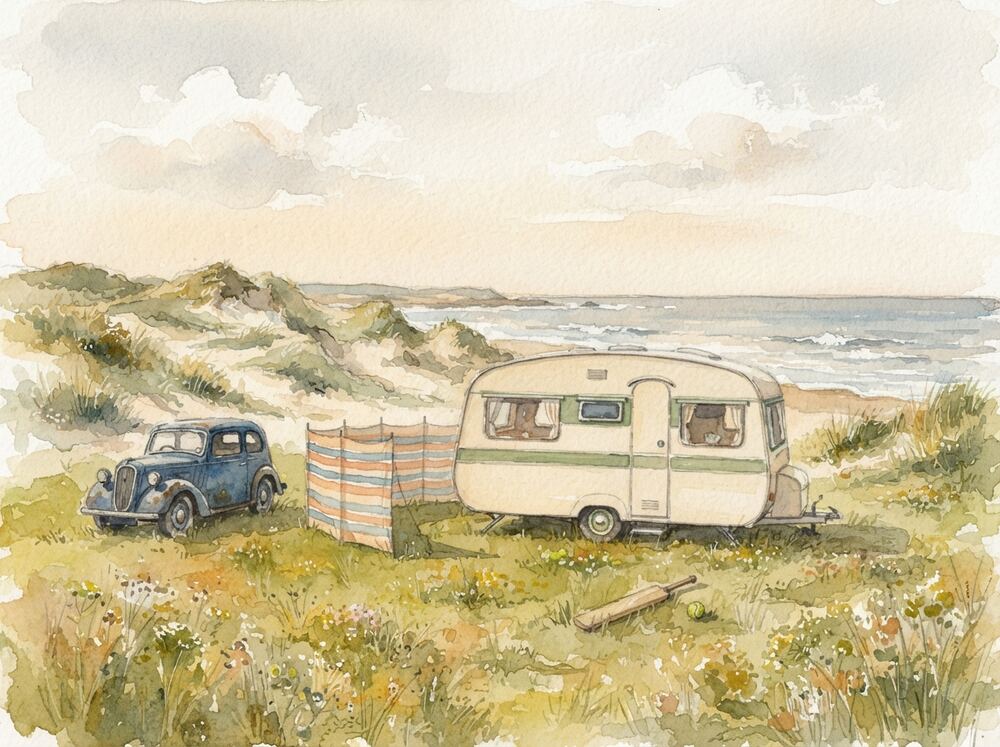
We went to Weston most years, because I could never keep away, but sometimes it was Barry Island, and once, in 1969, to Longleat to see the lions, which Janet talked about for a month. We always stopped for dinner at the same pub, where they laid long tables outside, and the landlord brought out plates of ham and tomatoes and pickled onions until nobody could eat any more. The men had a pint. The women had a shandy and said they shouldn't. The children ran about until they were sick on the coach home, and nobody minded.
It was the foreman's job to make a speech, and for twelve years that was me. I hated it. I would stand up with my glass, red to the ears, and say, 'Well, thank you all for coming,' and everybody would cheer as if I had said something marvellous, and I would sit down again. Ruth says it was the shortest speech she ever heard, and the best.
Mr Ellery himself came along, in a camel coat that he wore whatever the weather, and went round every table asking after each child by name. He knew all of them. I learned from him that people will do a great deal for a man who remembers their children's names, and I tried to do the same in the press room. The photograph that hung in the canteen afterwards showed the whole firm on the steps of the pub, squinting. I'm in the back row, trying to look taller.
On the way home, with the children asleep in a heap and the light going gold over the fields, Reg would play something slow on his mouth organ and the whole coach would go quiet. I would look at Ruth, with Sue asleep on her lap and her hat gone crooked, and think that I was the luckiest man in Bristol.
I know the firm has gone, and that kind of outing has gone with it. But I would like you to know that it happened, and that a hundred and forty people once climbed onto a coach on a June morning and sang all the way to the sea.